

 The bravest Ukrainian researchers and innovators submitted applications and were successful in calls under the EU’s Framework Programmes for Research and Innovation – Horizon 2020 and Horizon Europe – long before the full-scale invasion. It was a rewarding yet challenging experience, with researchers admitting that they felt lost in terms and conditions of the calls for proposals and that stand-alone information events were not sufficient to develop a high-quality proposal.
To ensure that as many Ukrainian researchers and innovators as possible could participate in the calls for proposals under the EU’s Framework Programme for Research and Innovation “Horizon Europe”, systematic information and consulting support was needed: from navigating the Programme and writing applications to managing awarded projects.
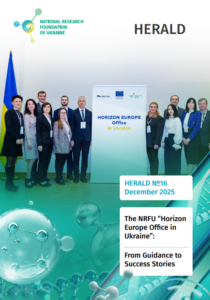
Since October 2023, this support has been provided by the Horizon Europe Office in Ukraine which operates on the basis of the National Research Foundation of Ukraine (NRFU). The Office’s activities are fully funded by the European Commission, which is a unique case and demonstrates the EC’s strong confidence in Ukraine’s institutional capacity, particularly that of the NRFU, in the field of research and innovation.
What has the Office achieved over the past two years? What kind of requests does it receive from the research community? What are its plans for the near future?
We posed these and other questions to specialists at the NRFU Horizon Europe Office in Ukraine: Igor TARANOV, Head of the Department, Nataliia DIDENKO, Deputy Head of the Department, and Leading Officers of the Department Nadiia NAUMOVA, Oleksandr MOISEIEV, Maksym KOLISNYK, and Yuliia KOSHYK.
We also asked Signe RATSO, Deputy Director-General, DG RTD, European Commission, to share her perspective on the Office’s work.
 Igor TARANOV, Head of the NRFU Department “Horizon Europe Office in Ukraine”
– It has recently been two years since the Horizon Europe Office in Ukraine was established on the basis of the NRFU. The primary goal of the Office is to increase the involvement of Ukrainian participants in the Horizon Europe Programme. Has there been any progress toward achieving this goal?
Igor TARANOV: Yes, there has been some progress, and it is significant. The involvement of Ukrainian participants in the Horizon Europe Programme has increased considerably. I am confident that the establishment and active operation of our Office on the basis of the NRFU have contributed to achieving the highest participation levels since the launch of the Programme.
Here are some figures. In less than five years of the Horizon Europe Programme (2021-2025), participants have secured 31.5% more grant funding (€64.27 million) than during the entire seven-year Horizon 2020 Programme (€48.87 million).
The average grant amount per project increased by 27%, rising from €208,000 under Horizon 2020 to €263,000 under Horizon Europe. At the same time, the number of unique participants grew by 37.2, from 172 to 236 organisations.
The rate of project proposals submissions has also accelerated – by an average of 24% per month and 21% per year. While Ukrainians applicants submitted an average of 33 proposals per month (406 per year) under Horizon 2020, this number increased to 41 per month and 490 per year under Horizon Europe.
Most importantly, the success rate of our project proposals increased by 43.3%, rising from 9.33% under Horizon 2020 to 13.37% under Horizon Europe. This demonstrates that Ukrainian participants are not only submitting more applications, but are also significantly improving their quality.
At the conclusion of the Horizon 2020 Programme, Ukraine ranked seventh among 16 associated countries, securing €48.87 million (approximately UAH 2.4 billion). Ukraine also fully paid its participation contribution to the Programme.
Under the Horizon Europe Programme (2021-2025), Ukraine ranks seventh among 22 associated countries in terms of participation and eighth in terms of funding, with total grants amounting to €64.27 million (approximately UAH 3.2 billion). By decision of the EU, Ukraine has been exempt from paying participation contributions since 2022, making all received grants additional, non-repayable funding for the national research and innovation sector.

– Why was the Office established on the basis of the National Research Foundation of Ukraine?
Igor TARANOV: The European Commission approved this decision based on a positive assessment of the NRFU’s activities and considering plans to develop the Foundation’s capacity within the framework of the Ukraine’s Recovery Plan.
The launch of the Office on the basis of the NRFU has a number of key advantages. Here are just a few examples.
Firstly, there is institutional sustainability. The NRFU has clear procedures, a decision-making system and financial control mechanisms. This enables the Office to operate without additional organisational costs.
Secondly, since 2020 the Foundation has been holding calls for proposals and implementing projects in accordance with international standards of transparency and independent review. This facilitates integration with the tools and mechanisms of the Horizon Europe Programme.
Thirdly, the Foundation works with Ukrainian researchers, universities, innovation groups and start-ups and is a centre for advising potential participants in the Programme. This shortens the path from receiving information to submitting an application and increases researchers’ chances of success in the calls for proposals.
In addition, the Foundation has established mechanisms for providing grant support on a competitive basis with transparent reporting. This is critically important for the European Commission, as it ensures that both financial and technical resources are managed appropriately.
Efficiency was also a compelling argument. Establishing a separate structure would have demanded time, extra funding, verification and approval procedures. Locating the Office at the Foundation made it possible to avoid such delays.

– The Office’s website states that the Department acts as a navigator in the Horizon Europe Programme. Could you please explain how this navigation is carried out?
Igor TARANOV: The Horizon Europe Programme has a complex structure and requires high-quality navigation, both for newcomers and for experienced participants.
The Office operates in the line with the NRFU’s core principle – ‘Researchers for Researchers’. Our team consists of 14 specialists who provide consultation on the Programme’s clusters and components. 12 specialists of the team hold an academic degree and/or have experience as National Contact Points (NCPs) in previous Framework Programmes. Several officers are assigned to each component of the Programme.
The first step is to help applicants identify the Programme component that best matches their project idea or the strategic interests of their institution. This guidance is provided during information events or through individual consultations.
The second level of navigation focuses on guiding through specific calls for proposals. Each call has its own thematic priorities, consortium requirements, and expected outcomes. Applicants often seek assistance in identifying the appropriate call for proposals or in conducting a detailed analysis of its terms and conditions.
A separate important focus is the partner search. Over more than two years of work, we have built a stakeholder database containing over three thousand contacts. Each applicant’s data (with their consent) is entered into the database increasing their chances of being noticed by European partners. We regularly receive requests from foreign participants seeking Ukrainian partners for consortia. Moreover, this trend is expected to intensify, as the European Commission has introduced unprecedented support mechanisms for Ukraine for 2026-2027: €50 million for direct support to Ukrainian participants and around €200 million for calls for proposals that encourage their participation.
Getting a consultation is easy: simply send a request to horizoneurope.info@nrfu.org.ua, indicating your first and last name, institution, contact details, and the nature of your question. We will promptly provide a detailed response and, if necessary, continue working through individual consultations. There is no limit in the number of consultations – support continues until the issue is fully resolved.
– The NRFU Horizon Europe Office in Ukraine also functions as a NCP for the Horizon Europe Programme. Could you please tell us more about this area of work?
Igor TARANOV: The Office serves as the key NCP for Ukrainian participants of the Programme and coordinates the activities of the NCP network.
The Office supports every potential participant in the Programme – from individual researcher and PhD candidate to university, research institute, innovative start-up, business, and civil society organisation.
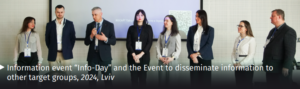
Our Department holds workshops, information events and training sessions. We provide guidance on terms and conditions for participating in the Programme, and showcase best practices from NCP networks across the EU and associated countries. We also share information on best practices of Ukrainian participants in the Programme’s calls for proposals and their positive impact on the national research and innovation infrastructure. Useful information is published on our website and social media channels – Facebook, X, and LinkedIn – while recordings of information and training events related to participation in the Programme are available on our YouTube channel.
– One of the Office’s tasks is to prepare and provide guidelines and recommendations for shaping policies aimed at Ukraine’s integration into the European Research Area (ERA). Who submits such requests, and what recommendations has the Office already provided?
Igor TARANOV: We receive such requests from the Ministry of Education and Science of Ukraine and other central executive authorities responsible for shaping policies in research, innovation, and digitalization. Occasionally, we also receive requests from parliamentary committees and interagency groups involved in European integration processes.
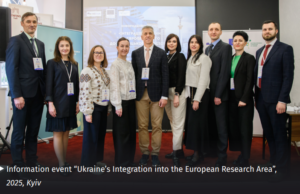
On 30 April 2025, the Ministry of Education and Science set up a working group to develop a Roadmap for Ukraine’s integration into the European Research Area for 2025-2027. Within its work, it was highlighted that integration into the ERA is not only a strategic priority, but also a practical tool for modernising our research and innovation system. It allows national objectives to be aligned with European policies and ensures full participation in joint initiatives.
In May 2025, Carolina Cañibano, Seconded National Expert at the European Commission, presented the concept of the second ERA Policy Agenda for 2025-2027. The document outlines 11 long-term structural ERA policies and 8 ERA actions adopted by the EU Council on 28 February 2025. Such a comprehensive set of measures includes, in particular, support for researchers in crisis situations and enhanced engagement with associated countries, including Ukraine.
The Roadmap for Ukraine is being developed based on updated European priorities. The Office has already prepared a number of recommendations to align Ukrainian policies with European standards. These include proposals to strengthen the institutional capacity of research institutions, promote open science, update mechanisms for evaluating research outcomes, expand researcher mobility, and enhance the transparency and efficiency of funding.

I would like to emphasise that integration into the ERA is not a one-time step, but a long-term systemic process. Ukraine is gradually strengthening its research and innovation system and becoming a full-fledged member of the European research community. In this process, our Office plays a key role by providing systematic support to Ukrainian institutions and researchers, helping them navigate Programme calls for proposals, and facilitating partnerships with European counterparts.
– How do the NRFU and the Office collaborate with the European Commission? In what ways does the European Commission support the Office’s activities?
Igor TARANOV: The Office maintains close contact with the European Commission’s Directorate-General for Research and Innovation (DG RTD). We take part in online meetings and webinars and receive clarifications regarding calls for proposals, changes to work programmes, new support tools, and EU policy initiatives.
An important area of cooperation is strategic interaction. The European Commission systematically engages representatives of the NRFU, including the Office, in discussions on EU science and innovation policies: from mechanisms to support Ukrainian participants to the development of strategies aimed at strengthening institutional capacity and advancing Ukraine’s integration into the ERA.
In particular, recent meetings of the EU–Ukraine Joint Committee addressed the needs of Ukrainian science in the context of the war, the results of participation in the Horizon Europe Programme, and further steps towards integration. Special attention was paid to political, institutional, and financial support for Ukrainian researchers, specific calls opportunities, mobility programmes, and initiatives to restore research infrastructure. The European Commission confirmed its readiness to continue supporting Ukrainian science.
The European Commission fully funds the Office’s activities and provides a range of mechanisms that enhance its capacity, namely access to information resources, participation of EC experts in our events, specialised training on preparation of applications for Ukrainian researchers, and support in establishing contacts with European counterparts.
An important element of cooperation is collaboration with the EU Delegation to Ukraine. Its staff actively participates in events for Ukrainian researchers and supports the Office’s activities. Ambassador of the EU to Ukraine Katarína Mathernová has repeatedly emphasised the importance of Ukraine’s participation in the Horizon Europe Programme, and Yehor Pyvovarov, Policy Officer for Research and Innovation at the EU Delegation to Ukraine, has noted the contribution of the NRFU and the Office to the positive dynamics of Ukraine’s participation in the Programme.
The European Commission has consistently recognized the Office’s activities, and a recent decision has been made to extend its financial support for the next three years.
– What are the Office’s plans for the near future? As Head of the Department, what is your most ambitious dream?
Igor TARANOV: The key task is to maintain momentum and reinforce cooperation with stakeholders: the Ministry of Education and Science of Ukraine, the NCP network, research institutions, businesses, potential applicants and organisations already implementing projects.
The coming year will be highly intensive. We are going to focus on increasing the participation of Ukrainian applicants in the Horizon Europe Programme, since two major waves of deadlines are expected in the new 2026-2027 Work Programme. The first is to begin in late January – early February 2026. We are already sharing information about a series of brokerage events aimed at partnership building and are planning to hold our own information events.
Preparations for the next, 10th Framework Programme are already under way. This raises a strategic question: what role should Ukraine play in this Programme? It is crucial to adapt the structure of the NCP network in advance, prevent any interruptions in work, and enter the next programme well prepared.
My ambitious dream as Head of the Department is to establish a system of consulting and project support of such high quality that Ukraine will rank among the top ten countries in terms of successful projects in future framework programmes. I am confident in our enormous potential, and with the systematic efforts of all stakeholders involved, this goal is not merely a dream but a fully achievable reality.
 Nataliia DIDENKO, Deputy Head of the NRFU Department “Horizon Europe Office in Ukraine”
– In your opinion, what is the current state of the grant culture in research and innovation? Do you see it developing further?
Nataliia DIDENKO: The work of the Office relies on the capabilities of the NRFU which allows us to effectively support researchers and innovators in participating in European calls for proposals.
Today, the grant culture in Ukrainian research and innovation is rapidly maturing. Just a few years ago, grants were seen as an unattainable opportunity reserved for a select few. Today, however, an increasing number of researchers, universities, research institutions and businesses view grant programmes – both national and European – as a tool for developing their ideas. This is evident across all indicators: the number of submitted applications, signed grant agreements, and requests for consultations continues to grow. Teams are prepared to work according to international standards – planning, reporting, building partnerships, taking responsibility for outcomes, and representing Ukraine on the international stage. A new research and innovation culture is emerging, focused on openness, competition, and accountability.
Of course, there is still much work ahead – creating a systematic framework takes time, and competition in European programmes is very high. Nevertheless, the trend is clear: with every call for proposals, more researchers and innovators are thinking ambitiously, preparing strong projects, and ready to engage on the global stage.
 Nadiia NAUMOVA, Leading Officer of the NRFU Department “Horizon Europe Office in Ukraine”
– How is the demand for the Office’s information and advisory services from institutions of higher education evolving? Has the number of applications submitted and grants awarded increased?
Nadiia NAUMOVA: In 2023, after two and a half months of operation, the Office received 16 requests, 8 of which came from institutions of higher education. This was an initial period when universities were just getting familiar with our services.
In 2024, the number of requests grew rapidly to 334, with 111 coming from institutions of higher education. This demonstrates that universities are actively seeking opportunities for international cooperation and funding.
In 2025 (as of 03.12.2025), the total number of requests reached 430, including 65 from institutions of higher education. The decrease in requests from universities compared to 2024 can be explained by positive changes: universities have become more experienced and now handle most issues independently; they only contact the Office for complex, highly specialised matters or when forming consortia. Additionally, the FAQ section on the Office’s website allows users to find answers to the most common questions on their own.
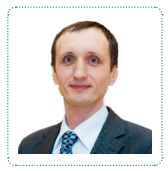 Oleksandr MOISEIEV, Leading Officer of the NRFU Department “Horizon Europe Office in Ukraine”
– How is demand for information and advisory services from research institutions evolving? How has the activity of these institutions in submitting applications to Horizon Europe Programme calls for proposals changed?
Oleksandr MOISEIEV: Demand for consulting support from research institutions keeps growing. Actually, the first request received by the Office came from a research organisation – the National Academy of Sciences of Ukraine.
The dynamics of requests from research institutions reflect growing interest in participating in calls for proposals: in the first two months of 2023 – 5 requests were received; in 2024 – 25; and in the first 11 months of 2025 – 44.
The content of questions is also changing. Researchers increasingly seek in-depth analyses of specific calls for proposals, support in preparing applications, advice on financial and legal matters, etc..
The results are positive as well. Under Horizon 2020, research institutions submitted 103 applications, signed 69 grant agreements, and received €8.36 million funding. As of 3 December 2025, under Horizon Europe 111 applications were submitted, 57 grant agreements signed, and €10.32 million received.
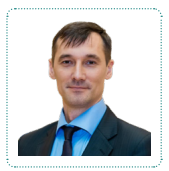 Maksym KOLISNYK, Leading Officer of the NRFU Department “Horizon Europe Office in Ukraine”
– How often do businesses take advantage of the opportunities offered by the Horizon Europe Programme?
Maksym KOLISNYK: Business is the driving force behind Ukraine’s participation in the Horizon Europe Programme in terms of both the volume of funds attracted and the number of unique participants.
This is clearly illustrated by the distribution of funding received: private for-profit organisations (excluding institutions of higher or secondary education) – €20.68 million (32.2%); institutions of higher or secondary education – €19.93 million (31.0%); research institutions – €10.86 million (16.9%); other organisations – €7.95 million (12.4%); public authorities (excluding research institutions and institutions of higher or secondary education ) – €4.86 million (7.6%).
Between 2021 and 2025, Ukrainian businesses received €20.68 million under the Horizon Europe Programme, accounting for 32.2% of the total funding received by participants from Ukraine. Currently, 75 grant agreements have been signed (30.7% of all grant agreements involving Ukraine participants), and the average grant amount for businesses is €360,200 per project, compared to an average of €263,400 for all Ukrainian participants.
The largest number of successful projects is concentrated by the following pillars and components, in this order: ‘Global Challenges and European Industrial Competitiveness’, ‘Excellent Science’, ‘Widening Participation and Strengthening the European Research Area (WIDERA)’ and ‘Innovative Europe’.
 Yuliia KOSHYK, Communications Officer of the NRFU Department Horizon Europe Office in Ukraine
– In your opinion, what can be done to make the results of research projects more visible to society?
Yuliia KOSHYK: A key condition for the development of the research landscape in Ukraine is the implementation of open science principles. This involves free access to research results and scientific data, as well as transparency of scientific activities, so that this knowledge is understandable and accessible both to specialists and to the general public. Promoting science increases the visibility of research, helps attract funding, builds trust among society and grant providers, and motivates new talents to choose a scientific career.
This approach is also written in the Horizon Europe Programme where dissemination of information about projects is a mandatory part of grant obligations. Participants are expected to communicate their results to a broad audience, including through the media and social networks.
It is very important to discuss not only successes, but also challenges and failures, explaining how particular problems were addressed. This helps future participants see the real picture, understand the conflicts between European Horizon Europe rules and Ukrainian legislation, and identify ways to overcome these challenges.
The Horizon Europe Office in Ukraine actively promotes successful projects. We engage Programme participants as speakers at information and training events. During these meetings, researchers share their experiences, provide practical advice, and address questions. Such communication helps those who are hesitant to overcome doubts about their own abilities and gain confidence. We also publish interviews with Programme participants in the ‘Success Stories’ section.
In addition, we have held a series of webinars during which Ukrainian project coordinators shared their experiences.
Therefore, we encourage everyone to participate in our events, ask questions, follow updates on our website and social media, request consultations, and, most importantly, not be afraid to apply for Horizon Europe calls for proposals.
 Signe RATSO, Deputy Director-General, European Commission, DG RTD
From the European Commission’s perspective, how has the Horizon Europe Office in Ukraine contributed to strengthening Ukraine’s research and innovation community and enhancing its participation in the Horizon Europe Programme?
The Horizon Europe Office in Ukraine has become a key entry point for both Ukrainian stakeholders seeking to explore the opportunities under the Horizon Europe Programme and international partners interested in collaborating with Ukrainian researchers and innovators. It serves as a bridge between Ukraine’s research and innovation ecosystem and the European Research Area. Through its dissemination events, the Office has reached numerous regions of Ukraine, showcasing the opportunities offered by Horizon Europe. This has not only increased awareness among Ukrainian researchers and innovators but also strengthened the EU’s presence in Ukraine.
While it is too early to assess the full impact of the Horizon Europe Office in Ukraine, I can confidently say that it has significantly raised the visibility of Horizon Europe opportunities and reinforced the ties between Ukraine and the EU.
Interviewed by Svitlana GALATA