

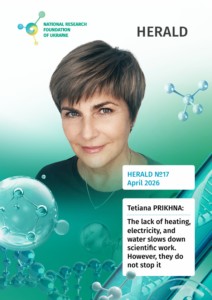
Today, science in Ukraine is focused on areas of strategic importance to the country: ensuring security, developing the energy sector, and restoring critical infrastructure. The focus is not only on applied research, but also on fundamental studies that provide a solid foundation for practical solutions. In particular, in the field of materials science, hundreds of research projects have already led to the implementation of innovative technologies. An important role in supporting such research and developments is played by the National Research Foundation of Ukraine (hereinafter – the NRFU, Foundation) which funds the most promising projects and contributes to the strengthening of the scientific potential of the country.
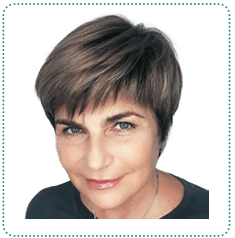 How do Ukrainian researchers work during the war? And how does the Scientific Council of the NRFU operate under wartime conditions? We asked Tetiana PRIKHNA, Member of the Scientific Council of the NRFU, Doctor of Technical Sciences, Professor, Head of Department at V. Bakul Institute for Superhard Materials of the National Academy of Sciences of Ukraine (NAS of Ukraine), Full Member (Academician) of the NAS of Ukraine, the World Academy of Ceramics (WAC), and the Euro Mediterranean Academy of Arts and Sciences (EMAAS).
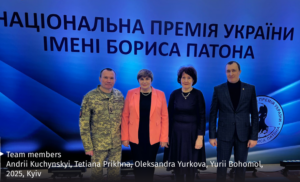
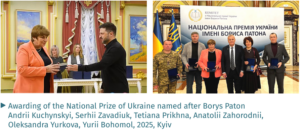
Recently, Tetiana Prikhna was granted the highest state award in science – the National Prize of Ukraine named after Borys Paton.
— Ms. Prikhna, you are a member of the Scientific Council of the Foundation. What motivated you to join its activities?
— I was motivated by the desire to contribute to the work and development of the NRFU.
The establishment of the Foundation which funds research on a competitive, grant-based basis, is a historic milestone for Ukrainian science. It was the research community that invested significant efforts in creating this institution. Today, work on improving the regulatory framework, the terms and conditions of calls, and the overall functioning of the Foundation is ongoing, and it is important for me not to stand aside. It is very easy to criticise certain shortcomings from the outside but it is far more important to be part of the process and help improve it.
Despite the fact that this is demanding and unpaid work, I have never once regretted my decision.
— Could you please tell us how the Scientific Council operates and how the decision-making process is organised?
— The Scientific Council defines the main scientific priorities of the Foundation in supporting fundamental research, applied research, and scientific and technical (experimental) developments; oversees the overall allocation of funds; approves the results of the competitive selection of projects; monitors the implementation of research projects and the use of the Foundation’s funds; also performs a number of other important functions that are difficult to list in full.
The Council members meet almost every week. When there is a need to approve agreements or review reports, we meet more frequently. A few years ago, a decision was made that Council meetings should last no longer than two hours. However, in practice, sometimes they extend to three, four, or even five hours. This is not easy but there are issues that require immediate attention.
Incidentally, the meetings of the first-term Scientific Council used to last much longer. Discussions were often very intense, as Council members held differing views on how to prevent unfair reviewing of applications. Today, however, more coherent approaches to organising the work have been established. The legislation is also gradually improving, creating better conditions for higher-quality reviewing of applications.
I am pleased that we have managed to build trust between representatives of different sections. If a member of the Scientific Council proposes a solution within their area of expertise, their judgement is trusted.
All Council members are highly qualified professionals and work very conscientiously, as even a single incorrect word in the terms and conditions of a call may lead to errors and misunderstandings.
— Ms. Prikhna, you are also a member of the European Society for Applied Superconductivity (ESAS). Could you tell us how your experience in international cooperation contributes to your work in the Scientific Council of the Foundation?
— Experience in international cooperation is indeed very valuable (and all members of the Scientific Council have such experience). It makes it possible to see how grant management is developing in European countries and how research and innovation programmes are being improved. It also helps identify shortcomings and seek ways to address them.
The NRFU is still a very young institution operating within a legislative and regulatory framework that is not yet fully developed. The Foundation is working to improve this framework, taking into account the views of Ukrainian researchers and aligning its practices with European experience.
I will mention a few requirements that complicate the work of both the Foundation and researchers.
First, there is the requirement for full financial reporting at the end of the year, as stipulated by Ukrainian legislation and regulations. If funds are not used, they must be returned to the state budget. However, these rules do not consider the possibility of force majeure circumstances, for example, issues with equipment procurement or travel abroad.
In addition, it is also not always possible to complete complex and long-term research projects on time. At the same time, reporting on such projects is still required, including the submission of publications in high-ranking journals.
In international grant schemes, for example in NATO programmes, each stage of a project can be completed at any time, and any unused funds can be rolled over to subsequent stages. Project PIs are also able to reallocate funds between cost items without requiring approval from NATO officers.
At the NRFU, it is also possible to reallocate funds between cost items; however, the amounts are currently quite limited, and the rollover process remains complex, as it requires a decision of the Scientific Council.
Another challenge is the review of applications. Each year, the Foundation launches an increasing number of calls, including those for the annual grants of the President of Ukraine, the Verkhovna Rada Prize, international calls, and others. The review of the applications requires reviewers. Unfortunately, remuneration for Ukrainian reviewers conducting scientific and technical reviewing is critically low, and no such remuneration is provided for foreign ones. As a result, timely and high-quality review is a real challenge. I am convinced that payment for conducting reviewing should be increased, and legislative changes are also needed regarding the remuneration for foreign reviewers.
I also note that international foundations and research institutions employ far more staff than the NRFU. The specialists working at the Foundation are incredibly busy. Members of the Scientific Council who develop terms and conditions of calls are equally overburdened. Despite this, the Head of the Scientific Council – Oksana Kis, the Heads of the Sections, and the Directorate of the Foundation, and personally the Executive Director of the Foundation, Olha Polotska, do all their best to make the necessary decisions on time and ensure that grantees receive their funds.
I am convinced that the number of employees at the Foundation should be increased. In addition, funding for improving the electronic project submission system needs to be significantly increased.
And yet, despite all obstacles and the heavy workload, the Foundation performs better each year. Its work is vital for supporting researchers, improving the quality of research, and, more broadly, for preserving and advancing Ukrainian science.
— Could you recall the most challenging and the most rewarding situations during your work in the Scientific Council? Which actions and efforts are you particularly proud of?
— I am pleased that the number of calls launched by the Foundation is increasing. At the beginning, there were only two; this year, ten are planned. The Foundation is developing and has earned recognition both in Ukraine and internationally.
II can also recall my own actions in challenging situations. For example, there was a case when I managed to convince the Council members to allow a research institution to purchase necessary equipment. The situation was as follows: the organisation that was supposed to handle the procurement failed to complete the tender, so the research institution had to run a second one. The Foundation was informed about this tender at the last moment, the head of the institution did not explain the situation clearly, and the Council members tended to believe that the funds – UAH 1.5 million – should be returned to the state budget. I was able to clarify the situation, and the Council made a decision that allowed the procurement to proceed.
I would like to emphasise that challenges in the work of the Scientific Council do not arise because its members are unable to reach a consensus. The issues and difficulties occur because there simply aren’t enough specialists in every area of research.
— Recently, you were awarded the National Prize of Ukraine named after Borys Paton for your work “Powder-based manufacturing technologies for structural components of advanced machinery”. How long have you been working on this topic? Who is part of your team, and what have you managed to achieve?
— The team consists of seven researchers from universities and research institutions*. This has been a multi-year effort during which we faced dead ends, underfunding, and the challenges of the war. Nevertheless, despite these difficulties, we managed to achieve breakthrough results.
We developed new high-penetration metal-ceramic materials, as well as a range of high-temperature, reinforced ceramic structural materials for components of spacecraft engines.
The results of this work have been implemented in serial production at several enterprises in Ukraine (for more details, see: https://surli.cc/adfgyg).
The significance of this work is confirmed by feedback from both Ukrainian and international researchers. For example, Yury Gogotsi, one of the world’s highly cited researchers, emphasises that our results constitute a significant scientific contribution in the fields of materials science and powder metallurgy, with substantial impact on progress across numerous sectors of industrial production.
The research has resulted in the publication of four collective monographs, 205 articles in Category A journals (169 in international journals), and 56 articles in Category B journals. Five invention patents and 31 utility model patents have been granted.
— Which area of this work is specifically yours?
— My contribution to the project involves the development of powder materials and methods for manufacturing powder for use in advanced technology, aviation, pyrotechnics, and personal protection.
Thanks to a comprehensive research approach, we have developed materials with the highest performance characteristics known worldwide. This approach combines the determination of fundamental properties and patterns, the use of computer modelling, and the application of advanced powder metallurgy techniques.
We have created new high-level protective ceramic materials – lightweight and impact-resistant (patent granted).
Special coatings have been developed for aircraft engine components that withstand extreme loads at temperatures of up to 600°C.
A new energy-efficient method has been devised for manufacturing specialized powders and thermite mixtures that burn at temperatures up to 2300–2700°C and cannot be extinguished with water.
Superconducting materials have been created for lightweight, low-noise electric motors in next-generation hydrogen-powered aircraft, and for high-speed power electrical and electronic devices, and other high-tech applications. These materials enable the production of stronger, smaller magnets, opening the way for more powerful, compact, and stable lasers, significantly improving efficiency and reducing the size of fusion reactors, and enhancing the resolution of magnetic resonance imaging (MRI) systems while simultaneously reducing their size and weight.
— Among this year’s laureates, only four are women, two of whom are in your team. Ms Prikhna, why did you choose materials science as your field?
— Research is incredibly fascinating. I chose this field for that very reason – I am curious about exploring the world. Materials science is an interdisciplinary field of science and engineering aimed at creating materials with improved properties, such as strength and thermal resistance. I have never once regretted my choice, as the results of our research are important not only for science but also for the real economy.
I first saw the high-pressure press which I now use in my research when I was five years old, when my father took me to work with him. I remember being fascinated by the equipment and drawing it repeatedly in my childhood sketches.
My passion for science was instilled by my parents. My mother was a talented design engineer, and my father, a World War II veteran, was involved in the early development of industrial technologies for producing synthetic diamonds and the equipment required for their synthesis. He served for ten years as Deputy Director for Research at V. Bakul Institute for Superhard Materials of the NAS of Ukraine. Today I work at the same institute.
By training, I am a mechanical engineer, having graduated from the National Technical University of Ukraine “Igor Sikorsky Kyiv Polytechnic Institute”. My second speciality, “Physics of High-Temperature Superconducting Materials”, I pursued at Taras Shevchenko National University of Kyiv, after completing my PhD.
I gradually retrained as a materials researcher. I realized that developing new materials requires a broad scientific outlook and deep knowledge of physics and chemistry, so I have studied extensively (in fact, I continue learning throughout my life), read articles and books, and engaged with fellow researchers.
For more than twenty years, I combined research with teaching chemistry at Kyiv National University of Construction and Architecture where I was awarded the title of Professor. Since 2018, I have been a member of the National Agency for Higher Education Quality Assurance.
— How has the war affected your work and the work of your research team?
— I would say that we work in defiance of the war. The lack of electricity, heating, water, and frequent breakdowns of outdated equipment and water pipes significantly slow down the work. However, they do not stop it.

For many years, I have collaborated with research institutes and universities in European countries and the United States. When the full-scale invasion started, I received offers to collaborate from research institutes and universities in Germany, the UK, France, Australia, and Spain. Currently, I work closely with the Leibniz Institute for Solid State and Materials Research in Dresden and the Institute of Materials Science of Barcelona (ICMAB-CSIC) which are among the world’s leading materials science institutes.
Participation in international conferences provides the opportunity to engage with leading researchers. Recently, for example, two research projects under the NATO Science for Peace and Security Programme (Rutgers University, USA) were completed, and a new one is beginning which we won together with researchers from Poland and Australia. We have also submitted an application to the COST programme. In addition, together with researchers from Germany, Spain, and Georgia we plan to apply for the Horizon Europe programme.
Incidentally, all the materials are developed and produced right here in Ukraine.
— Do Ukrainian research projects gain recognition abroad? Are they competitive?
— Without any doubt, Ukrainian researchers are highly qualified professionals, and our research is highly valued worldwide.
The success of Ukrainian researchers is evident in the international projects they participate in. One example is the competitive selection for additional grant opportunities for Ukrainian researchers initiated by the Dutch Research Council (NWO) in cooperation with the National Research Foundation of Ukraine. New international calls launched by the Foundation also demonstrate the respect of global funding organisations for Ukrainian science. Involving Ukrainian researchers in such projects is not charity but a mutually beneficial partnership.
Today, science in Ukraine focuses on areas that are critical for the country – security, energy, and the restoration of critical infrastructure, among others. Hundreds of fundamental studies, particularly in materials science, have already formed the basis for practical solutions.
I am confident that, once the war ends, these new solutions and technologies will help rebuild the country. Europeans will come to Ukraine to learn new technologies, including those in the defence sector.
— Ms. Tetiana, in your opinion, what kind of government support should science receive, particularly fundamental research?
— Ukrainian researchers, through their intellect and dedication, achieve remarkable results, conducting world-class research even with outdated equipment. However, it is not possible to work indefinitely on enthusiasm alone. Funding for both applied and fundamental research needs to be increased.
Indeed, every discussion about the level and effectiveness of research should begin with the word ‘funding’.
I am pleased that the NRFU helps support science during such challenging times. Ukrainian researchers who succeed in the Foundation’s calls receive fair remuneration, have the opportunity to purchase materials and equipment, and are able to carry out breakthrough research.
— Do you see any changes in Ukrainian science during the war?
— In my experience, during the war we have learned to trust more – ourselves, our team members, and our international partners. We have learned to set priorities and focus on what really matters. Above all, our main goal is to protect our country.
We have seen that in modern warfare, victory goes to those who think faster and develop new solutions. Today, engineers, the military, and researchers work together. I am confident that the ability to respond to specific needs and rapidly implement new technical solutions will also be invaluable after the war.
Interview by Svitlana GALATA