Your Choice Regarding Optional Cookies on This Site

Site uses cookies to give users like yourself the best possible content and experience.

Ваш вибір щодо необов'язкових файлів cookie на цьому сайті

Вебсайт використовує файли cookie, щоб надати всім користувачам найкращий досвід використання.

12 December 2022 16:02

Hero city Kharkiv was Ukraine’s science hotbed until russia attacked. The crippled city refuses to give up

Russia’s bloody war on Ukraine, now in its 10th month, has killed or injured at least 17,000 civilians, including scientists and students. It has also displaced more than 14 million, according to the United Nations. More than 1300 Ukrainian scientists—primarily women and men older than 60—have fled, finding refuge in labs in other countries. Tens of thousands of students are studying abroad.

Nowhere in Ukraine has science suffered more than here in Kharkiv, an academic community that Gerson Sher, co-chair of a U.S. National Academies of Sciences, Engineering, and Medicine (NASEM) working group on rebuilding science in Ukraine, calls “the crown jewel of Ukrainian science.”

The crippled city refuses to give up despite everything. As winter draws near, academic centers here are buzzing with activity as staff repair blown-out windows. Some lab work and online classes have resumed, even amid blackouts and scant heating.

Read about the indomitability of the hero city and its scientific community in Richard Stone’s article for the Science: HERO CITY Kharkiv was Ukraine’s science hotbed until Russia attacked. The crippled city refuses to give up
Other news

23 March 2026

The National Research Foundation of Ukraine (NRFU) announces the launch of the Call for Proposals for Research Projects “Excellent Fundamental Science in Ukraine 2027-2029”

The Call is aimed at supporting excellent fundamental research involving the formulation and solution of respective scientific issues by groups of leadi

20 March 2026

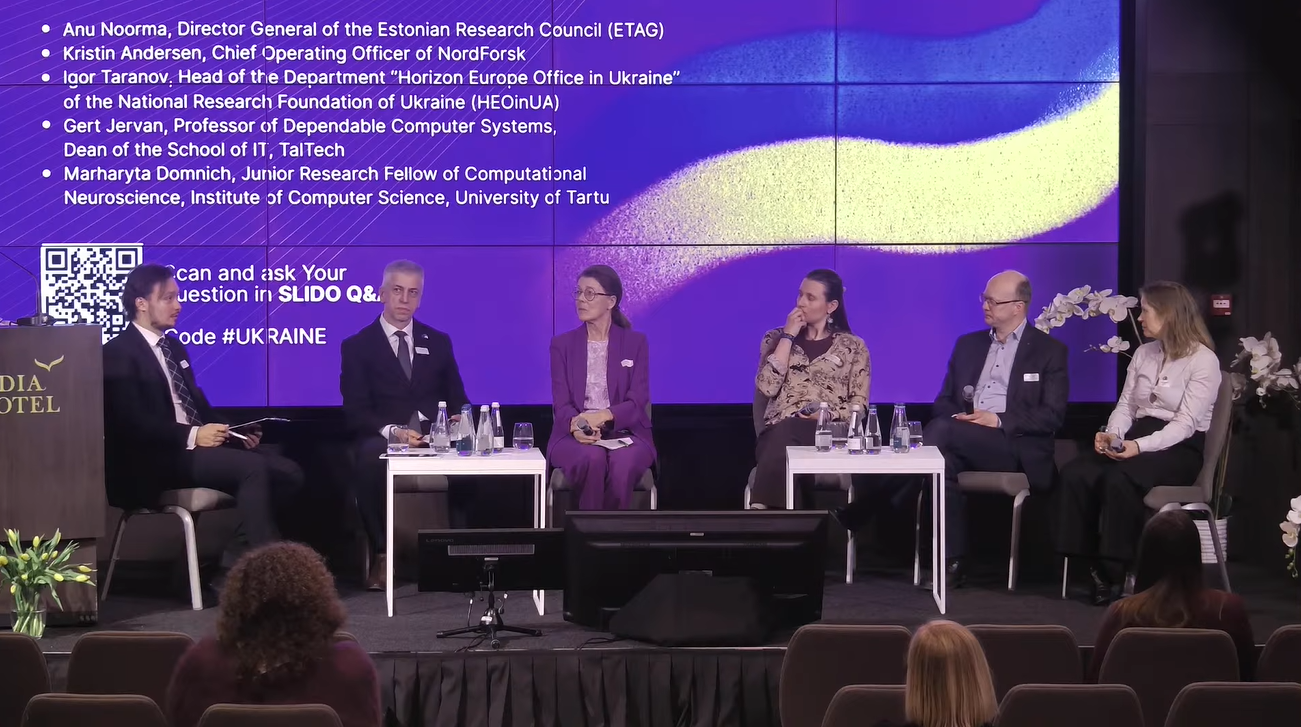
International Conference: “International Research Cooperation – with Ukraine and for Ukraine” took place in Tartu

On March 18, 2026, in Tartu, Estonia, the international conference “International Research Cooperation – with Ukraine and for Ukraine” took place. It wa

19 March 2026

Steering a Quantum Vortex

Every researcher is well aware that fundamental research matters. Such research expands our knowledge of the world and lays the groundwork for future te

17 March 2026

Final Days to Register: LUKE Joint Call – Collaborative Partner Matchmaking Event

Prospective applicants who are interested in participating in the LUKE Joint Call and are currently searching for potential partners are invited to regi

10 March 2026

International Online CDE Event “Connecting through LUKE: Introducing Joint Call and Website” brought together over 400 participants from across Europe

The International Online CDE event took place on 4 March 2026 within the LUKE project. During the event, the LUKE project team presented the key areas o