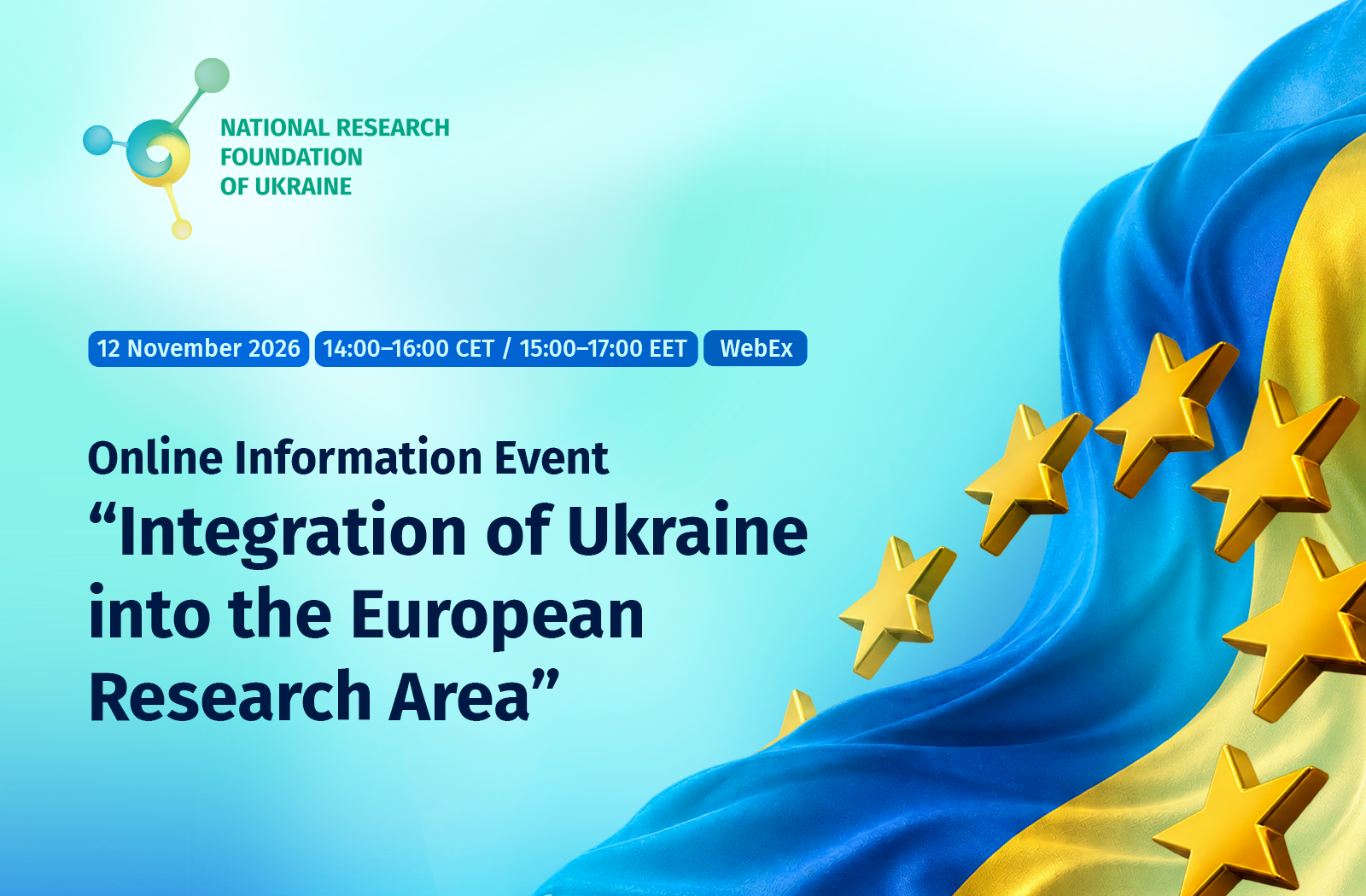
On 12 November 2026, an information dissemination event on Ukraine’s integration into the European Research Area (ERA) took place. The event was held on the occasion of World Science Day for Peace and Development. Participants discussed how Ukrainian science is becoming part of the common ERA and what experience universities have already gained in this regard.
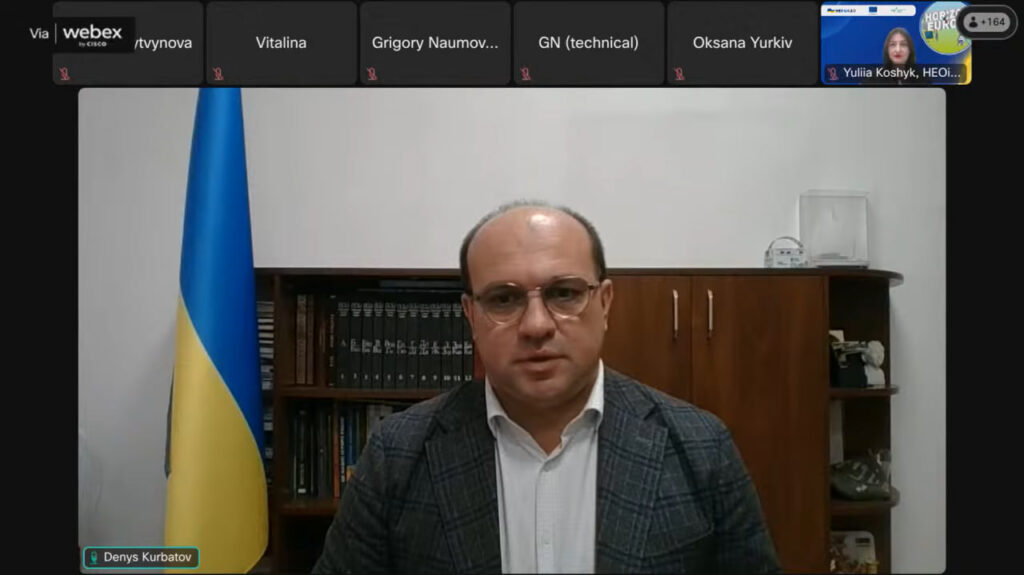
The event opened with welcoming remarks by Denys Kurbatov, Deputy Minister of Education and Science of Ukraine, international partners and representatives of the Foundation.
 |
 |
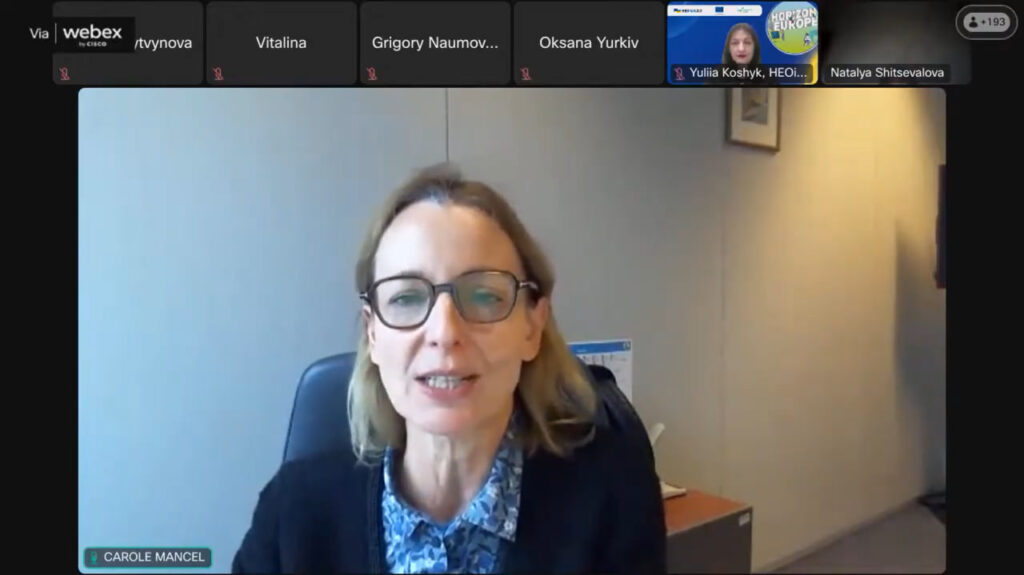
Carole Mancel-Blanchard, Head of Unit RTD 03, International cooperation, Europe and Americas, EC, emphasised that the key objective of the European Research Area is to remove barriers to researchers’ mobility and bring their efforts together across EU countries. As Ukraine moves towards EU membership, it seeks to become part of this Area. Achieving this requires reforms, sharing of best practices, development of researcher networks and joint projects. She stressed the importance of ensuring that Ukrainian universities and research institutions do not become isolated, and of creating conditions that would enable Ukraine to maintain and strengthen its own research infrastructure and research area. She also noted that the EC recognises the efforts being made to reform the sector, including the recently adopted regulatory framework for the state attestation of research institutions. At the same time, the transition from a centralised post-Soviet system to a market-based model, where competition for research grants plays a key role, takes time.
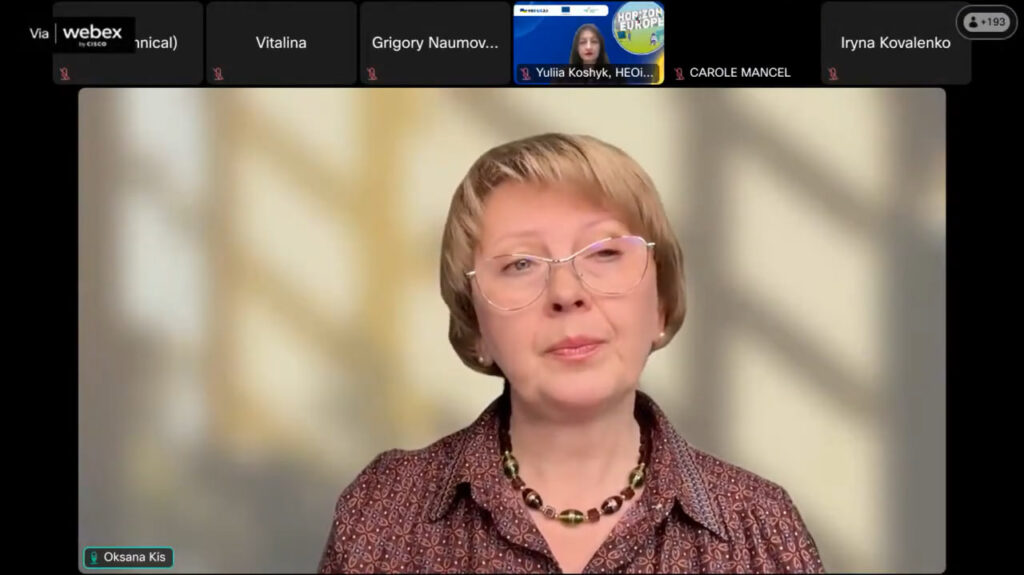
Oksana Kis, Head of the National Research Foundation of Ukraine, expressed her admiration for researchers who remain in Ukraine, continue their research and nurture a new generation of researchers. She also thanked colleagues who are temporarily working abroad, whose experience, she believes, will become a valuable asset in rebuilding Ukrainian science after the war.
Professor Oksana Kis recalled that since its establishment, the Foundation has awarded a total of UAH 3.5 billion in funding to 790 research teams comprising more than 3,000 Ukrainian researchers. Demand for support significantly exceeds available resources which is why the Foundation continuously seeks international partners. One example of such cooperation is the LUKE consortium where the peer review process is currently underway.
Speaking about the consequences of russia’s aggression – destroyed laboratories, libraries and lecture halls, the forced displacement of researchers, the relocation of research institutions and reduced funding – the Head of the NRFU, reflected that every crisis creates an opportunity for change. To illustrate this, she drew on the example of the Great Chicago Fire of 1871. At the time, 17,000 buildings were destroyed, leaving 90,000 residents homeless. Yet the city was rebuilt, and investments in new technologies paved the way for steel-frame high-rise buildings, fire-resistant cladding and safer passenger lifts.
“We cannot put out the devastating fire of war. However, our knowledge and vision will undoubtedly be indispensable to successful post-war reconstruction”, she stressed.
According to Professor Oksana Kis, researchers are capable of spotting windows of opportunity amid the ‘fault lines and cracks’ and shaping a vision of the post-war future for both the country and science.
 |
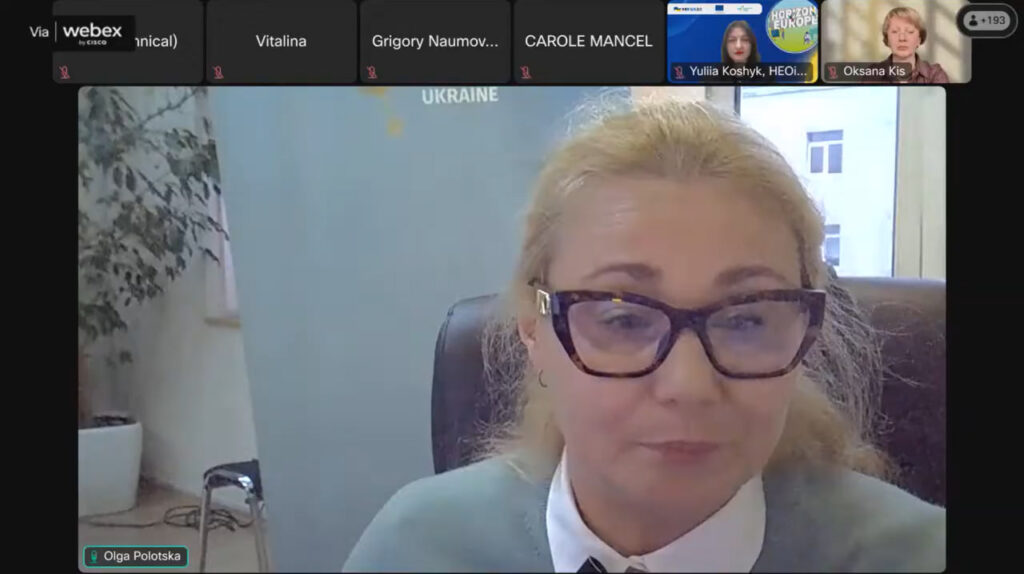 |
Olga Polotska, Executive Director of the NRFU, highlighted that World Science Day for Peace and Development and this year’s topic “Common Ground through Science Diplomacy” have particular significance for Ukraine. Air raid alerts disrupt the normal course of work, while power outages bring work to a standstill. Yet, despite these challenges, researchers keep returning to their research. It is the Foundation’s grant funding that provides researchers with the resources they need to achieve results that are important for both science and Ukraine’s recovery.
The Foundation engages international reviewers in the assessment of its call proposals and consults partner organisations on its approach to organising calls. A notable example is the call in the field of mental health organised jointly with partners from Norway (Research Council of Norway, RCN) under which researchers from both countries are studying Ukraine’s pressing needs while also learning from one another.
Together with the Horizon Europe Office in Ukraine, the Foundation also organises events involving National Contact Points to help researchers gain a better understanding of the programme’s requirements and prepare for application.
As Olga Polotska emphasised, integration into the European Research Area enables Ukraine to align priorities, pool knowledge around shared goals and gain access to EU research infrastructures.
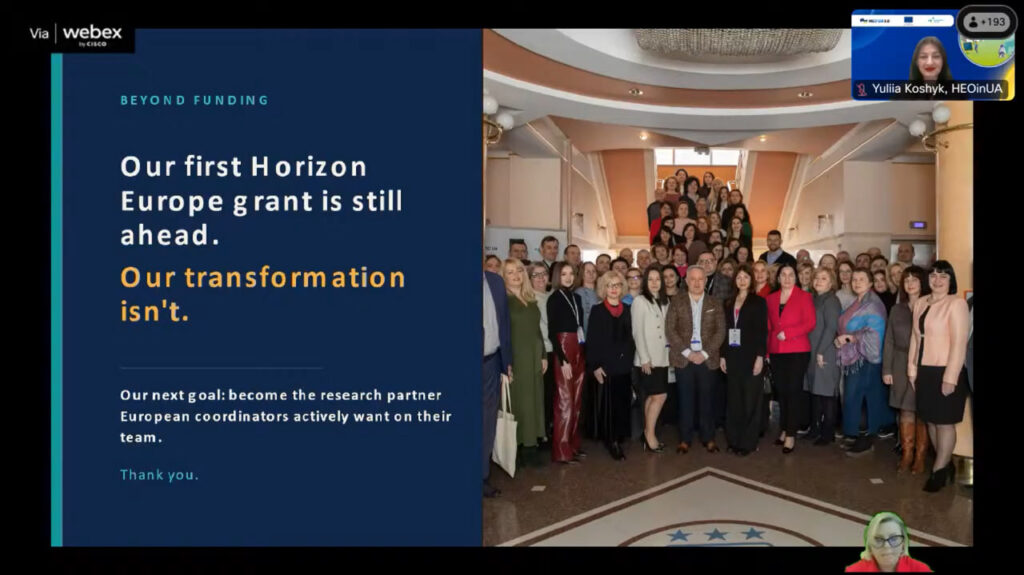
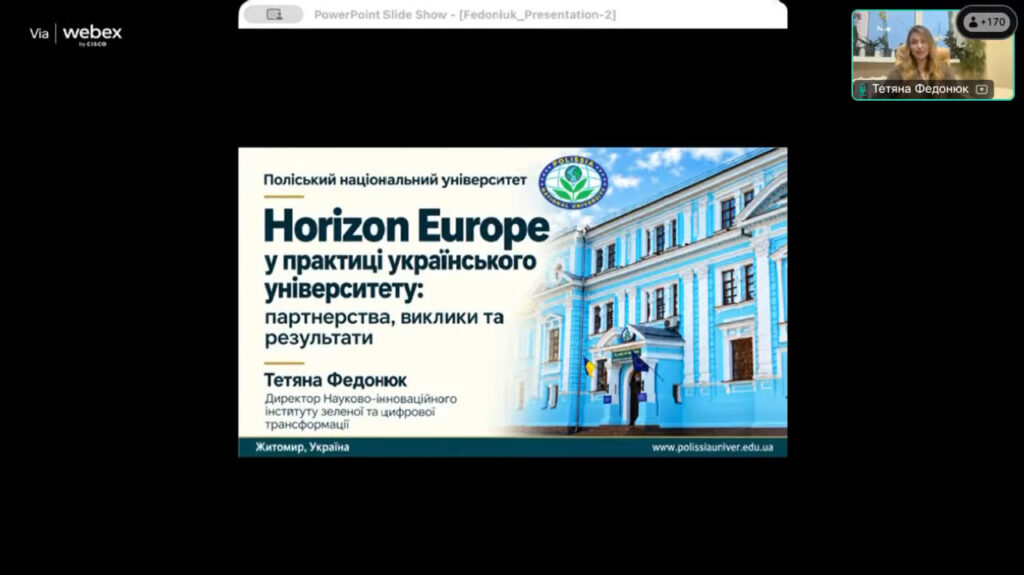
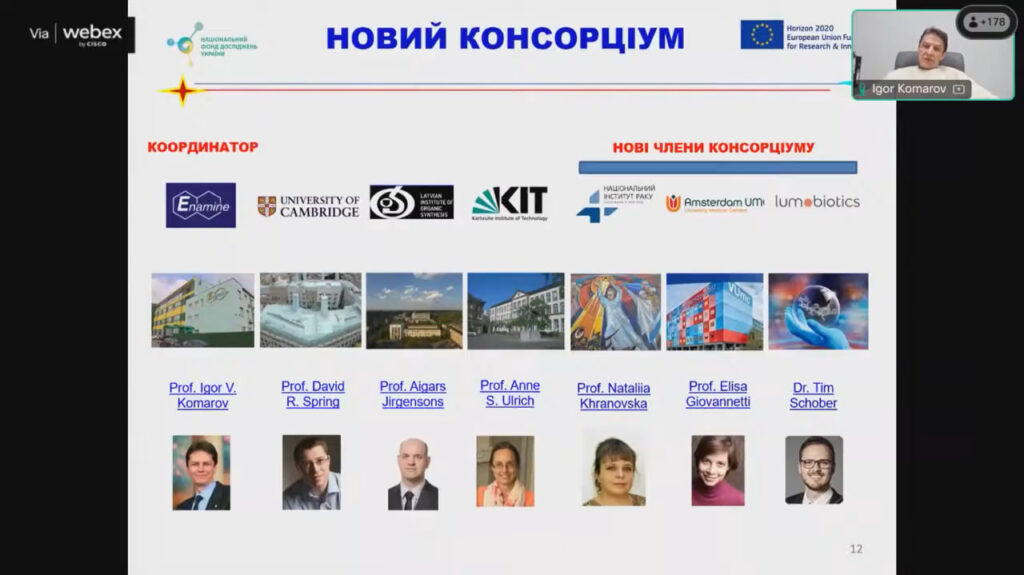
Representatives of three Ukrainian universities shared their practical experience. Professor Oksana Shevchuk of I. Horbachevsky Ternopil National Medical University spoke about developing research capacity and building European partnerships beyond the framework of national calls. Professor Igor Komarov of Taras Shevchenko National University of Kyiv told about international partnerships involving Ukrainian chemists and researchers in cheminformatics. Professor Tetiana Fedoniuk, Head of the Educational and Scientific Center of Agriculture, Environment and Bioeconomy at Polissia National University, shared insights into the university’s partnerships, challenges and experience of participating in the Horizon Europe programme.
 |
 |
 |
Yehor Pyvovarov, Policy Officer for Research and Innovation at the EU Delegation to Ukraine, who joined the event from Brussels, stressed that Ukraine is now on Europe’s radar. According to him, the discussion is increasingly shifting away from how Europe can help Ukraine during the war towards how Ukraine’s research potential, resilience and technological expertise can contribute to Europe’s future.
He emphasised that the European Research Area is not just about participation in Horizon Europe programme. It also encompasses approaches to organising research, funding research excellence, building research careers and ensuring the free circulation of knowledge across borders.
Yehor Pyvovarov welcomed Ukraine’s Roadmap towards the ERA, but reminded participants that the true measure of success is not a document but strong institutions, better conditions for research and more competitive research findings. The European Commission’s 2026 Report acknowledges the progress made by Ukraine, but also points to the need for further reforms and an independent institution tasked with overseeing research excellence.
He encouraged Ukrainian researchers to go beyond participating in European projects and take the lead in coordinating consortia. He also highlighted the role of National Contact Points in turning European opportunities into practical results. Yehor Pyvovarov believes that Ukraine is not merely benefiting from research cooperation but also making a significant contribution to European science, particularly in the fields of cybersecurity, artificial intelligence, energy resilience and robotics. Ukrainian innovative start-ups can strengthen Europe’s competitiveness. As he pointed out, Ukraine’s post-war reconstruction should not simply involve rebuilding what has been destroyed but rather building back better by drawing on modern technological advances.
Congratulating researchers on World Science Day for Peace and Development, he remarked: “Your daily efforts demonstrate that knowledge, creativity and the drive to achieve academic excellence cannot be defeated”.
The full recording of the event is available on the official HEOinUA 2.0 YouTube channel:
- In English:
- In Ukrainian